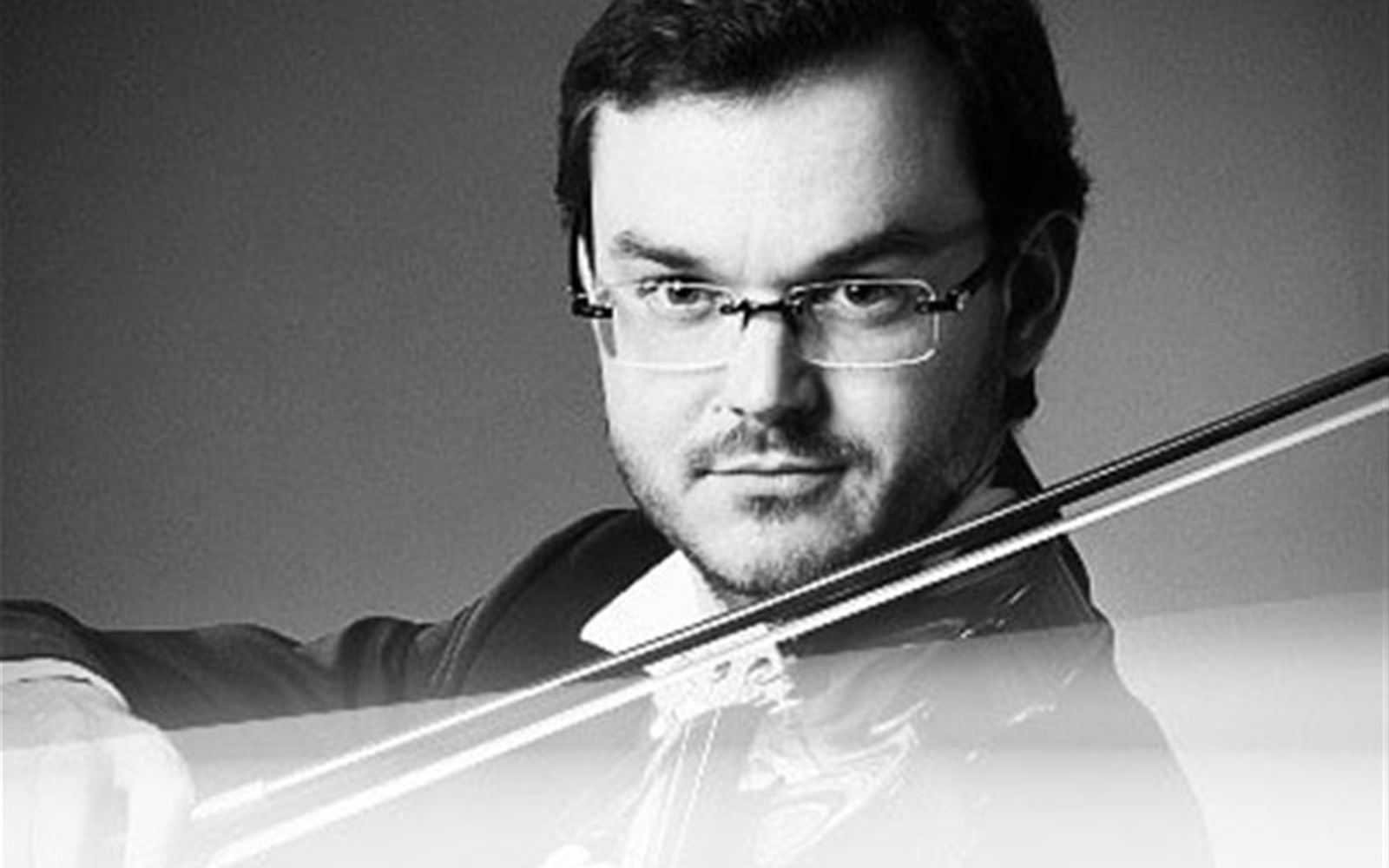
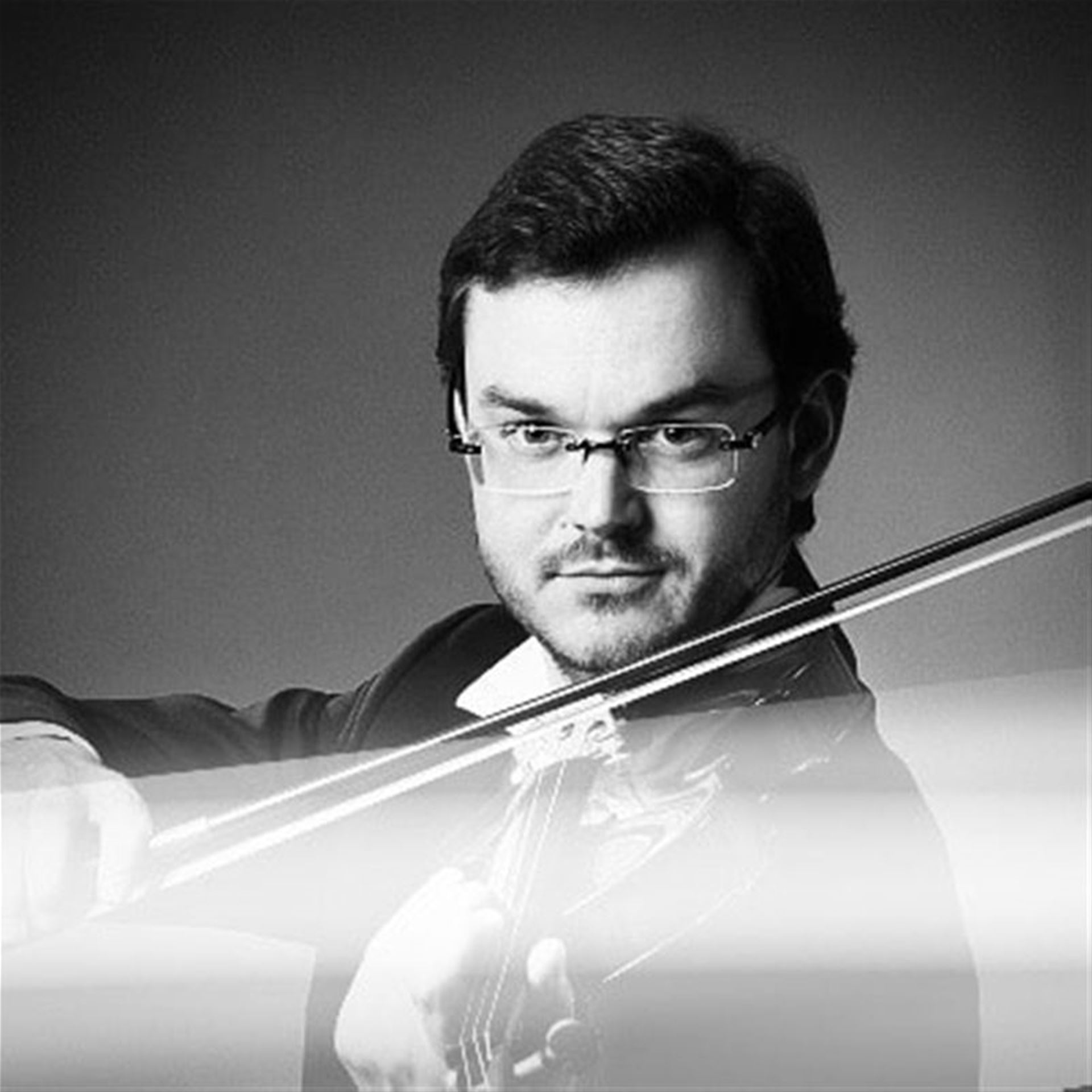
Jan Fišer is one of the most prominent representatives of the generation of young Czech violinists. He has many successes in many international competitions and experience from collaboration with a number of leading domestic and foreign orchestras. The breadth of his activities clearly ranks him among versatile artists. He is a long-time concertmaster of the PKF – Prague Philharmonia, with whom he also collaborates as an occasional conductor and soloist. In 2020, he also became the concertmaster of the Czech Philharmonic. He is a sought-after soloist and chamber player, not only on the violin but also on the viola, and in recent years he has also established himself as an artistic director and conductor. And to top it all off, he founded the Dvořák Trio, considered one of the best Czech chamber ensembles, together with pianist Ivo Kahánek and cellist Tomáš Jamník.
Music has been an integral part of his life since birth. His father, Jiří Fišer, an excellent violinist and now a great teacher, was a member of the Suk Chamber Orchestra and the principal of the Doležal Quartet, his mother sang and danced in the Rokycany folklore ensemble, and his younger brother Jakub, also a violin and viola player, is now the principal of the Bennewitz Quartet. Jan Fišer studied at the Prague Conservatory in the class of Professor Jaroslav Foltýn, and in 2003 he graduated from the renowned School of Music at Carnegie Mellon University, where he was a student of Andres Cárdenes. He also expanded his education at many master classes, including those with Stephen B. Shipps, Pinchas Zukerman, Gil Shaham, and Joseph Silverstein.
In addition to his home orchestra, the PKF — Prague Philharmonia, he collaborates with a number of orchestras; his debut with the Pittsburgh Symphony Orchestra (2000) and at the Prague Spring festival with the Talich Chamber Orchestra were particularly successful. As a soloist, he has performed at festivals in Switzerland (Murten Classics), Spain (Pau Casals International Music Festival) and the USA (Brevard Music Festival). As a concertmaster, he has been a guest with the BBC Symphony Orchestra, the Czech Philharmonic, the Bayerische Staatsphilharmonie – Bamberger Symphoniker, the Deutsche Radio Philharmonie Saarbrücken – Kaiserslautern and the Orquesta Clásica Santa Cecilia Madrid. As one of the five laureates, he participated in the CD Tribute to Jaroslav Kocian for the 40th Kocian International Violin Competition.
Jan Fišer, thanks to his rich experience playing with a symphony orchestra, chamber ensemble and solo performance (and his conducting practice certainly plays a role), is able to find the best possible balance between technical precision and musical expression, the character of the interpreted piece. As he himself says, “one must not get stuck in some meticulous treatment of each and every note. … It is important to find a balance between what I can afford, what the instrument allows me, how far I can go in relation to the interpreted piece and, for example, the acoustics of the hall…” A teacher can fundamentally help with the path to such a balance if he allows his students to sort out their opinions: “The relationship between a teacher and a student should always be about dialogue. The teacher should stimulate the student’s thinking and ask him why he plays it that way and how he wants to play it.”
We accept applications until 31. 3. 2025.
Application requirements
- Age: from 10 years
- Planned maximum number of selected participants: 6 students and their teachers.
- Solo violin and chamber music with a predominance of string instruments
- Repertoire for the nomination recording: 2 pieces from different periods
- Samples must be uploaded (as a public or private link) to YouTube – see Application conditions.